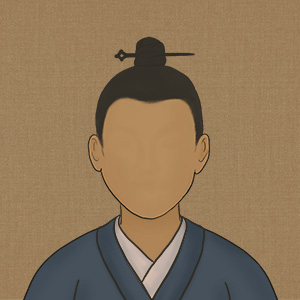
Fortunately, Liu Zhen lives in the seaside village.
His righteousness is increasingly respected, and his virtue and reputation are exalted with age.
He is a descendant of scholarly lineage in Qiao State and a paragon of filial piety in Wuling.
With white hair, he fulfills his duties as a son, cherishing his parents' love even if it costs him.
He nourishes his will with the sweetness of his parents' love and brings them joy.
He has both an older brother who is difficult to surpass and a younger son who is even more virtuous.
The colors of flowers are gathered together on the banquet, and the sound of ancient instruments fills the cup.
In autumn, fields are harvested with crops of glutinous broom corns, and morning fences are filled with chickens and pigs.
Suddenly, he bears an eternal sorrow and calls the soul of his beloved one from the nether world.
He forgets to sleep at night under the thick thatch roof, neglecting meals at dawn due to the sorrow.
Although he cannot touch his hands, he still feels their warmth and presence as if he could see his face and hear his voice.
The long white funeral flags float far away in the sky, and the painted lanterns are dim in the cold night.
He digs graves alongside the servants and weeps on his clothes, alone with his sorrow.
The snake transforms into five colors, symbolizing transformation and renewal, while the good tree grows from a single root.
The flowing water brings vitality to the tomb, signifying renewal and happiness in the new grave site.
Although he has completed the rites of mourning, he still adheres to his father's teachings in his dreams.
His good deeds inspire others, and his reputation in the community is unparalleled.
His name shall be remembered and honored with dignity, and his heart remains pure as the universe itself.
The herbs are flourishing in autumn, just like him; the bramble flowers are more abundant in later times.
The gate awaits recognition and praise from others, soon to be bestowed upon him with thin honors.